Materials & process development
Composition, synthesis, characterization, and scale-up—from 2 L to 50 L.
A Data-Driven AI Flywheel
Scientific knowledge. Preserved with context. Readable by AI.
G1Brain is Group1’s internally developed scientific knowledge platform. Built through four years of potassium-ion development, it makes experimental evidence, provenance, and scientific reasoning AI-readable.
Group1’s potassium-ion science traces its origins to the pioneering battery research of John B. Goodenough, recipient of the 2019 Nobel Prize in Chemistry.
Every experiment adds evidence. Every decision builds on it.
We built G1Brain to solve our own development challenges. It helped us rapidly commercialize potassium-ion materials, electrolytes, and batteries.
Reports and scientific discussions retain semantic context: what a result meant to the researchers, which explanations they considered, and what they chose to investigate next.
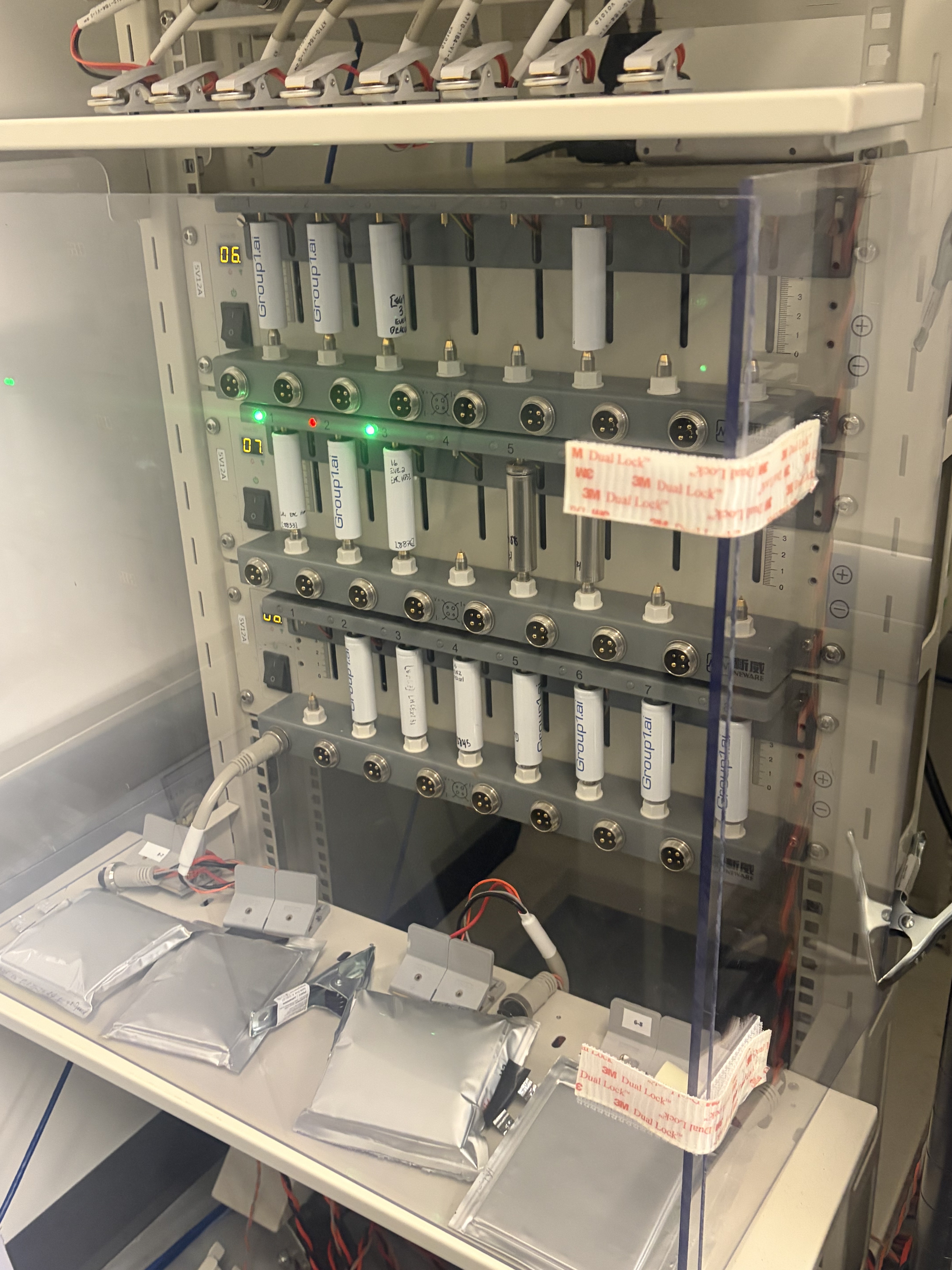
Cell testing produces the measurements behind performance comparisons and further investigation.
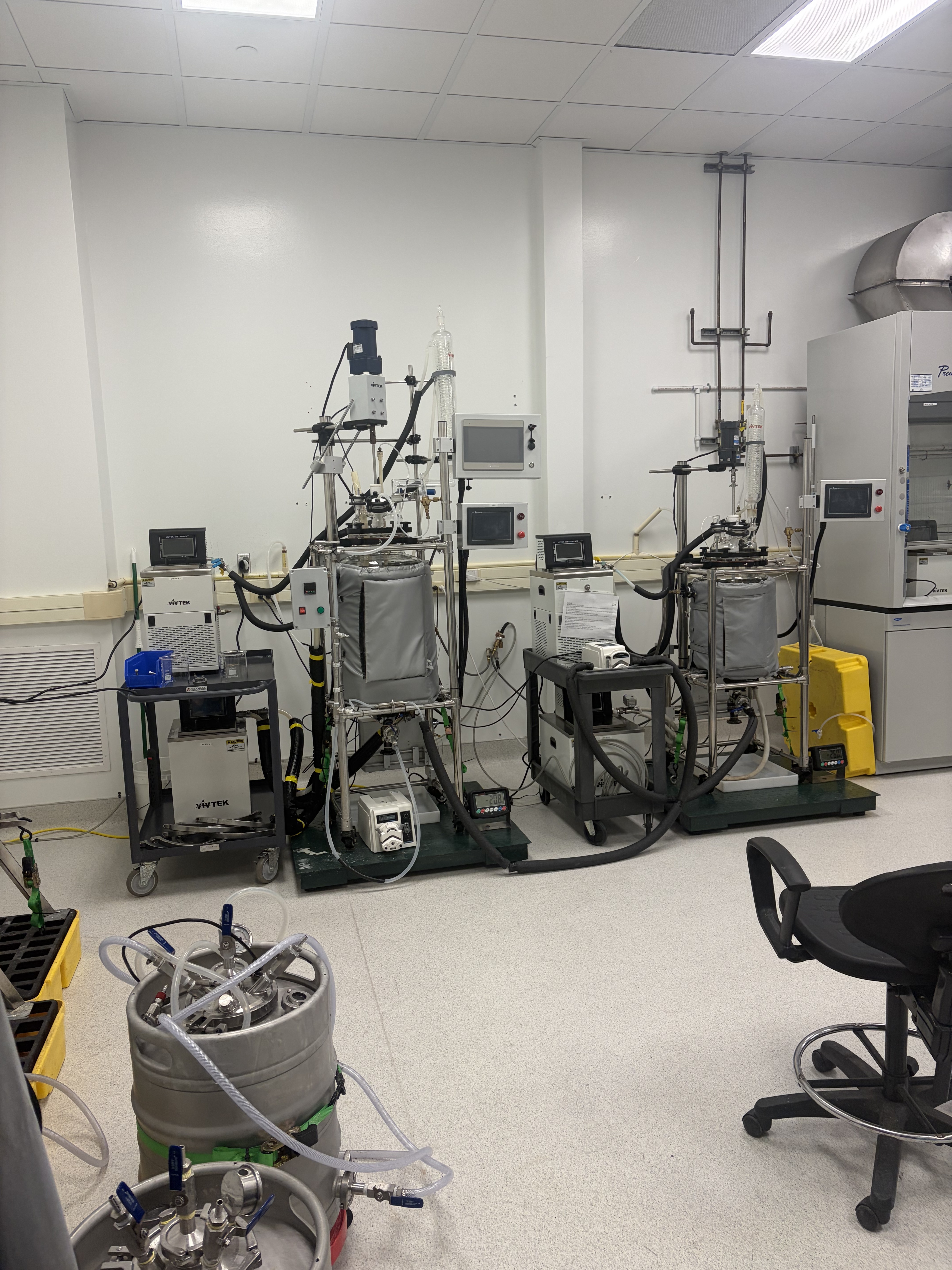
Pilot-scale synthesis connects materials development with the process conditions and observations that give data context.
Predictive models often break down when a process changes scale. The record holds synthesis runs at both, with conditions and outcomes.
Failed experiments and underperforming cells, kept with the diagnosis and the corrective action.
Three isomers of one electrolyte molecule measured alike, then performed differently in cells. The record holds the measurements, the cell data, and the reasoning.
Instrument files, spectra, images, and cell-test data.
Formulations, process conditions, and results.
Reports and discussion that hold the reasoning.
Measurements, instrument files, and images preserved from the original experiments.
Records connect results to their materials, conditions, and experimental history, with provenance preserved.
Scientist-led reports preserve results, interpretations, and the reasoning behind next steps. Recent reports include AI-assisted preparation.
Synthesis recipes, processing conditions, thermal analysis, diffraction, microscopy, and process development.
Formulation choices, physical properties, spectroscopy, and comparisons of cell behavior.
Electrode preparation, assembly, cycling, degradation, and failure analysis across coin, pouch, and cylindrical formats.
Researchers followed one batch of battery material from thermal characterization to cell testing. Each step is a record, and each record links to the next.
Thermal measurements on one synthesized batch
Slurry and electrode records, with their conditions
Cycling results, tied back to the batch
The team's discussion of what the result meant
One material batch connects the original measurements, build records, and the team’s interpretation.
A second traced example follows an electrolyte design study from formulation, through physical property measurements, to cell cycling. Not every experiment is linked this completely. The linked threads are where the record is richest.
AI for Science needs more than published results. It needs the experimental record: what was tried, what failed, and why researchers chose the next test. G1Brain holds that record for potassium-ion batteries, from materials synthesis to cell performance.
Ask what to test next. Compare the plan with what the scientists chose.
Answers that cite the original measurement.
Recipes and conditions, from bench to pilot scale.
From electrolyte formulation to cell behavior.
Negative results the literature rarely reports.
Spectra and cycling curves, paired with interpretation.
G1Brain preserves the evidence and reasoning that researchers and AI need to carry knowledge forward.
Recover original results alongside their source records and scientific interpretation.
Relate synthesis recipes and process conditions to material quality as batches move from 2 L to 50 L.
Use unsuccessful experiments and failure analysis, which published literature rarely reports, to show models where the boundaries lie.
Pair spectra, diffraction patterns, micrographs, and cycling curves with the scientists' written interpretation.
Trace how materials, conditions, and decisions relate to experimental outcomes.
Answer a technical question by recovering the reported result, citing the original measurement, and explaining the recorded interpretation.
Ground an automated lab's planning in a real record of conditions, outcomes, and the decisions that followed.
Use prior successes, failures, and interpretations to inform the next experiment.
Potassium-ion technology is the first application. The underlying approach—preserving experimental evidence, scientific reasoning, and decisions in an AI-readable record—is designed to support scientific development across disciplines, with structure and validation adapted to each field.
Group1’s research agents already query the record and scientific literature. Model training and laboratory automation are future applications.
Source records are read-only.
Quantitative claims carry sample count and spread.
Comparisons across records are computed, not estimated.
Answers cite the records they draw on.
Connections vary by experiment.
Built through four years of use, informed by our team’s experience building scientific research organizations.
Experiments, technical reports, and research discussion are kept from the first year of work.
Formulations, process conditions, and results go into a lab informatics platform as the work happens.
The scientific record extends from coin cells to Group1’s first 18650 cylindrical cells.
AI research agents query the structured records and the literature alongside the team.
Potassium-ion technology is our first application. The same approach—preserving evidence, provenance, and interpretation for AI—can support development across scientific disciplines.
Three pages on the record, its scale, connected evidence, and example applications. PDF, Q4 2026.
Download the overview (PDF)Discuss the platform, its use at Group1, and its broader scientific potential.
Contact Group1Three pages on G1Brain’s scientific record, scale, connected evidence, and potential AI applications. Q4 2026.